




- Comment on the Richard Montague interview here
- Who should be recruited in January? Read this excellent recruitment doc from member ARLukomski
- PoN member McPie asks have we progressed under Martin Paterson? Join the conversation here.
- PoN member theAnticlough poses a new set of questions about the team, click here.
- Notts confirm Belshaw signing
- 👋🏻 Welcome the newest members of Pride of Nottingham! Drop by and say hello, it’s always great to see fresh faces joining the community. 🫱🏼🫲🏼
- 👀 Check out our activity stream to see the latest content as it happens live. Join in with the conversation on Pride of Nottingham.
- Got thoughts on Notts? Share them and help Pride of Nottingham hit its content target! 🏁
- Reply to and read discussions without leaving your screen. Check out the Pride of Nottingham 'Topic Feed', which brings you all the latest content from our community forum in one place.
Leaderboard
-
- All areas
- Fixtures
- Comments
- Quizzes
- Quiz Comments
- Quiz Reviews
- Status Updates
- Status Replies
- Videos
- Video Comments
- Video Reviews
- Topics
- Posts
- Events
- Event Comments
- Images
- Image Comments
- Albums
- Album Comments
- Blog Entries
- Blog Comments
- Articles
- Article Comments
- Wallpapers
- Wallpaper Comments
- Records
- Record Comments
- Record Reviews
-
Member Leaders
-
Graham
Members28Points56Posts

Team Leaders
No team results were found for the current leaderboard filters.
Popular Content
Showing content with the highest reputation since 17/09/25 in Articles
-
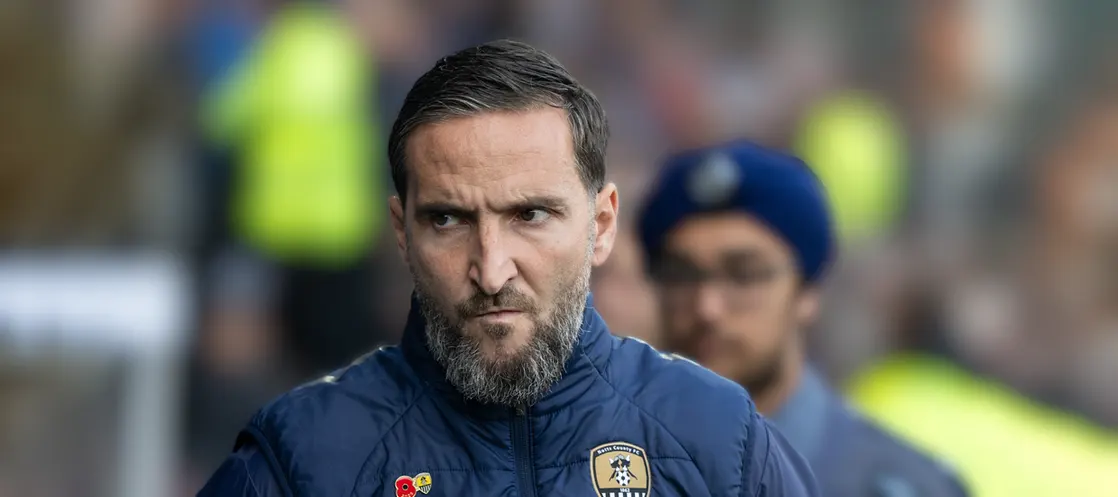 We all have our own ways of picking ourselves up after watching our team underperform. In my personal quest for reassurance, I sometimes find it helpful to listen to Martin Paterson’s post-match interviews with Adam Hassel. We’ve all listened to enough of these types of interviews to know not to expect too much from them, but sometimes the words and phrases chosen by Paterson provide important clues about how he is interpreting what he has just witnessed. After the Harrogate game he said, “we were not ourselves”, and used the word “cumbersome” to describe the first-half performance. At the very beginning of the interview he said, “emotional control is key”. Few who watched the game would disagree with any of these observations. Many of us who watched the game are now left wondering what the coaching team can do to make sure it doesn’t happen again. I believe that this is a particularly important question, given that the recent game against Harrogate Town was not the first time this season that our players have looked tentative and inhibited against significantly inferior opposition. The match against Brackley Town is another obvious example. So, what happened? Did the players ‘bottle it’ or ‘freeze’? If so, what does this tell Paterson about our players and our squad, and what can he do about it? One answer would be to say that we don’t have enough players with the right mentality and we need to make this a recruitment priority. Another approach is to understand the problem as a mental fitness issue which can be addressed through better training and preparation. I would like to think that Paterson and his coaching team will be doing both. You do not need to be an expert to recognise ‘freezing’ and ‘bottling it’ in sport as symptoms of performance anxiety. It is also widely known that performance anxiety can be overcome with the right mental preparation. But mental preparation in football is not something that often gets discussed in any detail, and this makes it difficult to understand exactly what it entails or what work is going on behind the scenes. In many ways it is no different from other types of preparation. Clubs who feel that they are gaining an advantage over their rivals by adopting certain practices want to maintain that advantage. I am not an expert and I have no inside information relating to Notts County, but I do have a general understanding of what the term mental preparation encompasses in a footballing context. For any performance activity, there are always two distinct elements of mental or psychological preparation. One concerns things like determination, confidence, motivation and belief. Performers need to have a strong will to succeed and a strong belief in their ability. Footballers must start the game in the right frame of mind and be ‘up for it’. They must also be mentally strong to keep going in adverse circumstances and, where necessary, grind out results. There is a growing body of evidence which suggests that under Martin Paterson this is becoming an area of considerable strength. As fans, we love the players who embody this mindset. It shows that they care, and their raw enthusiasm and aggression make them easy to identify with. But this is the easy bit. The other element, which is much more subtle, concerns the requirements for emotional control and concentration. Put simply, footballers need to be able to keep calm and stay focused. These requirements are necessary to balance the ‘being up for it’ element – Paul Gascoigne in the 1991 FA Cup Final being a classic extreme example of what happens when this balance isn’t achieved. They are also necessary because of the inherent randomness of football. Football includes many random events with mistakes, ricochets, interceptions and blocks sending the ball spinning or bouncing in ways which are hard to predict and successfully anticipate. A key footballing skill therefore is improvisation. But to improvise well, you must be maximally alert and maximally calm at the same time – a state of mind often referred to as being ‘in the zone’. It is much harder to achieve than it sounds, and evolutionary biology explains why. Human evolution has valued enhanced alertness as an innate and essential survival tool, used for identifying danger and threat, and this alertness is triggered by our anxiety response. In most circumstances therefore, if you are very alert you will be tense rather than calm, and if you are trying to calm down it is easy to lose focus. Although difficult to learn, the skills required to attain a state of mind which combines alertness with calmness can be learnt. Footballers who develop an expertise in this area find that, instead of being paralysed by pressure, they can convert it into an enhanced performance. Without wishing to ignite the whole David McGoldrick controversy, it does appear that he was a notable master in this regard. All professional footballers have pre-match rituals and routines which they use to help them with their emotional control and focus. But pre-match pressures vary from match to match and are often at their greatest when the expectation of impending success is high. So maybe what we are finding out is that, for matches in which Notts are overwhelming favourites – such as the recent Harrogate game – too many of our current players are discovering that their existing routines are not working. I have mentioned two other clubs in this article. There are ironies relating to each of them. Gary Cowan, the Brackley Town manager, is a man who co-hosts a podcast in which the presenters reflect on the mental side of the game, so we can assume that mental preparation is a particular interest of his. Simon Weaver, the Harrogate Town manager, famously brought in Gareth Southgate, who lives in the Harrogate area, to talk to his players about mental preparation in the week leading to their 2020 Wembley play-off final against us. As Martin Paterson is constantly saying, there is always something to learn from a sub-standard performance. It might just be that Harrogate Town have taught us the most important lesson of the season so far. Encourage people to join in with Pride of Nottingham and have their say on the match discussion ahead of tomorrow's home game against Colchester United. Take a deep dive into the Pride of Nottingham dashboard page and see which content fans feel like joining in with the conversation.15 points
 -
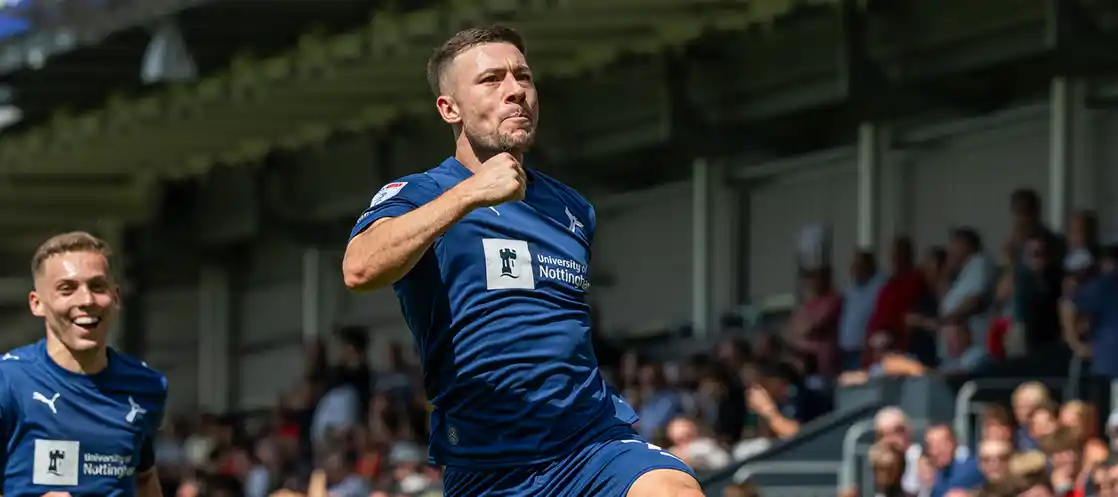 Cal Roberts’ return to Notts County matters not only because of what he may yet do, but because of what he makes supporters remember. Football fans live through moments, and the best of those moments lodge somewhere deeper than scorelines, dates or league tables. Memories are foundational to our identity as fans and central to the fellowship of the fan community. They shape us as individuals and help create the narratives that bind us to our fellow supporters. But memories are not all of one kind. Factual memories are very different from memories of how we felt. We know instinctively that memories of how something made us feel can endure long after the finer factual details have faded. There are many footballers from the past whom we simply remember. Others stir something in us that is more deeply embedded. When I saw Cal Roberts’ goal at Turf Moor, the first of his second spell, and heard how he described it in his post-match interview, it set me thinking about his type of footballer and what they mean to us, the fans. The season has only just started, and none of us knows how it will play out or what part he will play in it, but Roberts re-signing for Notts County feels like much more than a name restored to a squad list. For me, it is a homecoming that immediately summons images from the past. They are partly of Cal himself, of course, but they are also much more than that. It is as if a small door has opened in the mind, and behind it the noisy turnstiles and old stadium suddenly appear: the floodlights, the stoicism, humour and outrage of the terraces, the latter punctuated by that unconscious collective holding of breath when one player receives the ball and everyone in the crowd leans forward. Some footballers receive possession as a duty, an obligation to be discharged safely. But a winger of the old, dangerous kind receives it as a dare. He waits while the defender sizes up the challenge. Then comes the dropped shoulder, the half yard of deceit, and suddenly the shape of the pitch changes. Space appears where none seemed to exist. The defender, a moment earlier so sure of himself, is left facing the wrong way, and the crowd makes that sound belonging only to football – the sound of recognition. Something might happen now. That is the gift that Roberts brings. He plays with the bravery of a man prepared to lose the ball in order to discover something better than safety. He understands the old saying that football without risk is just geometry on grass. The full-back sees a line; the old-fashioned winger, or its modern-day equivalent, hears a question. The full-back defends a channel; the winger invents a road. Roberts has that glint about him, that sense of a player who knows something that hasn’t yet been revealed to the players around him. And then there is the way he strikes a football. There are shots that are hit, shots that are struck, and sometimes, with Roberts, shots that are almost sung. He has already scored twice this season - both very well executed goals, but it is his first-half shot against Leicester which somehow comes to mind as I write this piece. It screamed over the bar after being hit with extraordinary sweetness as well as power. There is that nickname, of course: the Geordie Messi. I understand the affection and humour behind it - truth disguised as irony, supporters reaching for language that captures what they have felt. And yet I have always felt a degree of discomfort with the comparison. Cal Roberts is not a version, an echo, or a local translation of anybody. He is the one and only Cal Roberts, and that, for me, is enough. For me, he summons older ghosts. More than half a century has passed since I first became a Notts County supporter, though it scarcely feels that way. Time passes strangely. One moment you are watching a modern player drift in from the wing; the next you are young again, standing among the smells of tobacco, damp donkey jackets and fried onions, seeing Jon Nixon, Stevie Carter and Ian Scanlon. Their names return not as facts but as sensations: Nixon gliding, Carter turning and scurrying, Scanlon carrying that promise and challenge offered by players of this kind: give me the ball and I will change this match for you. As self-appointed custodians of suspense, they knew how to create not only chances, but anticipation itself. Football has evolved: the boots, the shirts, the pitches, the language, the endless analysis, the data and the talk of systems and expected goals. Yet some things remain gloriously unchanged. A winger facing up to a defender near the touchline is one of them. It is football reduced to something ancient and simple: one against one, courage against caution, imagination against organisation. We may learn new words for the game, but our hearts still answer the old signals. The return of Roberts is a reminder that football at its best is still built on moments we feel and feelings we remember. These are the moments which combine to form the soul of our football club. Moments that can’t be quantified. Moments that defy description. He left, as players do, and the years passed. Careers are fragile things, shaped and buffeted by injury, opportunity, form, luck and timing. Now he returns older, perhaps wiser, with more miles in his legs and more knowledge in his game. He also returns with that familiar, intoxicating mixture of anticipation and possibility that holds our attention and keeps us coming back. Three league games tell us very little about how Cal’s second spell will ultimately unfold. But this opinion piece is not really a judgment about Cal. It is an observation about us - how we have already been reminded of what kind of player he is, and why players like him so readily capture our imagination. We all savour the rush of emotion when a goal is scored and the relief of the final whistle confirming victory. We take pleasure, too, in gritty performances, ruthless finishing and the skills of the players we admire. But what truly delights us, what lifts us, are the moments that break in and challenge our sense of what is possible. Cal Roberts is an author of those moments, and he knows it. He is one of those players who understands his power to change a game and, in doing so, to change us. Welcome back, Cal. Notts County face Doncaster Rovers tonight. Join the discussion, share your thoughts on the game, and let fellow Magpies know how you think it will unfold. Take a look at the newly redesigned Pride of Nottingham Dashboard, with a cleaner layout and an improved way to keep up with the latest around PON.13 points
 -
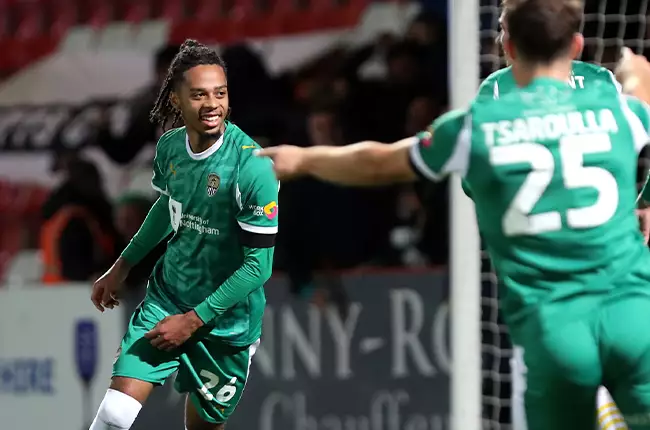 Notts County delivered a controlled away performance at The EV Charger Points Stadium, beating Cheltenham Town 2–1 to move back into the automatic promotion places. The Magpies came out with real intent, grabbing two goals before the break and keeping their heads as The Robins pushed to get back into it in the second half. From the first whistle, Notts found rhythm down both flanks. Keanan Bennetts and Nick Tsaroulla pushed high, while Scott Robertson and Tom Iorpenda kept the ball moving through midfield. A bright spell of corners brought early pressure. Lewis Macari headed over on seven minutes from a Bennetts cross after Sam Sherring conceded, and Robertson twice tested Joe Day from distance. The breakthrough arrived on 23 minutes from another set piece. After a Notts corner, Iorpenda kept the attack alive and slipped a neat ball into the box. Alassana Jatta reacted first and finished with his left foot into the bottom corner. It was a poacher’s goal and a fair reward for Notts’ front-foot start. Four minutes later the lead doubled. Tsaroulla, who had already won several free kicks in advanced areas, raided down the left and stood up a measured cross. Tyrese Hall attacked the space on the right side of the area and struck cleanly across Day into the same bottom-left corner. Notts almost had a third on 34 minutes when Tsaroulla rose to meet another Bennetts delivery, only to see his header come back off the right post. Cheltenham did rally just before the interval, but Kelle Roos and his defence blocked well, and the half closed with Notts two to the good after a composed, high-control display. The Robins made a forceful start to the second half. Crosses from Ryan Broom asked questions, and the hosts began to find second balls around the box. Roos made a key low stop from Jake Bickerstaff on 66 minutes, but from the follow-up phase Isaac Hutchinson kept his run alive and steered a right-footed finish from close range to cut the deficit. The stadium lifted, and Notts had to show a different side of their game. Martin Paterson’s team stayed organised. Lucas Ness and Jacob Bedeau won important headers, with Bedeau taking a booking for a robust challenge on 76 minutes after earlier cautions for Tsaroulla and Iorpenda. The bench helped steady things. Matthew Dennis replaced Conor Grant on 73 minutes to stretch the pitch, Maz Kouhyar came on for Bennetts on 83, and Oliver Norburn added know-how in the closing stages. Kouhyar soon created danger, swinging in a corner that Macari headed goalwards, only for a block to divert the effort. He then drove a shot just wide on 89 minutes after tidy hold-up play from Jatta. Cheltenham pushed late on, forcing corners and free kicks, but Notts managed the box well and cleared their lines when it mattered. The fourth official signalled three minutes of added time. Roos claimed high balls with authority, and the back line stayed compact. The whistle went at 2–1. The numbers underline the balance of the contest and Notts’ control for long spells. Possession finished 54.1% to 45.9% in Notts’ favour. Notts edged the stats with four shots on target to Cheltenham’s two and led 7–5 on corners. It was a gritty contest. Notts committed 11 fouls and picked up three yellow cards, while Cheltenham’s 12 fouls went unpunished. When it counted, Notts looked more dangerous going forward and stayed solid at the back under pressure. This was a strong, professional away win in League Two. The first half had fluency, width, and set-piece bite. The second half showed resilience, clear structure, and smart game management. Jatta’s instincts and Hall’s clean finish built the platform; Roos’ saves and the back line’s discipline protected it. At full time, with three hard-earned points secured at The EV Charger Points Stadium, Notts climbed back into the automatic places and sent the away end home happy. Head to the Pride of Nottingham match discussion to join in and share your thoughts on Notts County's 2-1 away win over Cheltenham. Take a moment to vote for who you believe deserves to be named Pride of Nottingham's Man of the Match for their performance tonight against Cheltenham.10 points

This leaderboard is set to London/GMT+01:00